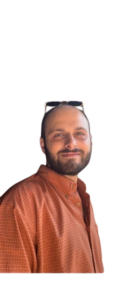
Giuseppe received his bachelor and master degrees from the University of Molise (Italy) in Agricultural Sciences, carrying out research on basidiomycete yeasts used as biocontrol agent against fungal plant pathogens. He then enrolled in the PhD program at the University of Molise to study the genetic mechanisms underlying the antagonistic activity of basidiomycetes yeasts and their ability to degrade mycotoxins produced by fungal plant pathogens. As part of his PhD program, he spent 14 months abroad at the University of Missouri-Kansas City in the laboratory of Alexander Idnurm to train on molecular genetics of basidiomycete yeasts. He returned in the same lab as research associate for 3 years and started working also the pathogenic basidiomycete yeasts Cryptococcus and Malassezia, which are phylogenetically related to the yeasts used as biocontrol agents. In February 2016 he joined the laboratory of Joseph Heitman at Duke University School of Medicine to continue his research on several biological aspects of basidiomycete yeasts, including both pathogenic and non-pathogenic species. Working also on pathogenic yeasts such as Cryptococcus and Malassezia has been advantageous because studying these microbes that are phylogenetically related to basidiomycete yeasts used as biocontrol agents he had the opportunity to use a wide set of molecular tools available and to study the evolutionary trajectory and the genomics features that allowed the emergence of pathogens from saprophytes microbes, such as the arrangement of the mating type regions, essential genes, mitochondrial inheritance, chromosomal fusion and fission, mycoviruses, and horizontal gene transfer. The skill and knowledge that he acquired on pathogenic yeasts were used to perform approaches of genomics, transcriptomics, and functional genetics on basidiomycetes biocontrol yeasts. In August 2019 he returned to Italy as Researcher (RTDA) at the University of Molise, in November 2022 he was appointed as RTDB (equivalent of assistant professor), and in November 2025 he was appointed as associate professor.
Raffaello Castoria is a full professor of plant pathology. His research focuses on the molecular and functional characterization of the mechanisms of action of microbial biocontrol agents. He is also engaged in developing sustainable strategies for the prevention and detoxification of mycotoxins in food and feed chains, with a special focus on the regulatory mechanisms underlying the degradation/detoxification pathways. He is co-inventor of the YSY® technology, a patented microbe-based solution for plant protection.
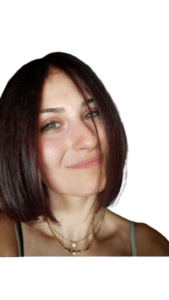
Erica Patriarca was born in Isernia, Italy, in 2000. She obtained a Master of Food Sciences and Technologies at University of Molise in Campobasso and, contemporarily, a Master of Molecular and Applied Biology at Polytechnic University of Marche. She won a research fellowship at the University of Molise, currently working on non-filamenting fungus and their pathogenicity. She is passionate about sports, travelling and research: for her, every day is a good day to network together!
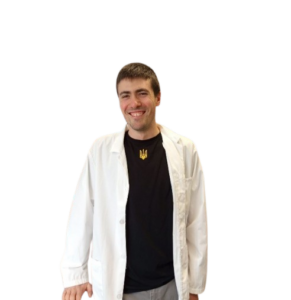
Filippo Di Virgilio was born in Vasto, Italy, in 1997. He obtained a Master’s Degree in Agricultural Sciences and Technologies in University of Molise in 2022. He has been involved in the project “TRacking down the balance between polyphenols ANd Senescence for biotic stress tolerance In potaTo” (TRANSIT), and now he’s at the 1 st year of PhD in Agrifood Production Sciences in University of Molise. His research fields are molecular mechanisms of adaptation to heat stress in fungi, plant – pathogen interaction under heat stress conditions, and beneficial fungi improving heat tolerance in plants. His hobbies are nature, literature and current affairs podcasts.
Samuele Doganiero was born in 1997. He obtained both his Bachelor’s and Master’s degrees in Agricultural Sciences and Technologies, during which he completed three research traineeships at different private and academic research centers, including facilities in Kiel, Germany, and Lodi, Italy, as well as at the University of Molise. During these experiences, he focused on the study of biocontrol agents, investigating their modes of action, conducting direct efficacy trials in the field, and evaluating crop safety. In 2023, he started a PhD in Food Production Sciences at the University of Molise, where his research focuses on the mode of action of the biocontrol agent Papiliotrema terrestris against foliar pathogens. In his free time, he enjoys practicing horticulture and reading.
Ngolong Ngea Guillaume Legrand (Ph.D.) is a scientist specializing in food safety, microbial biocontrol, and mycotoxin biodegradation. His research integrates molecular biology, biotechnology (CRISPR-Cas9), and microbial ecology to understand fundamental mechanisms and develop innovative yeast biocontrol strategies to control fungal pathogens and improve food quality. He has authored numerous peer‑reviewed publications and collaborates internationally on cutting‑edge approaches to sustainable food systems.
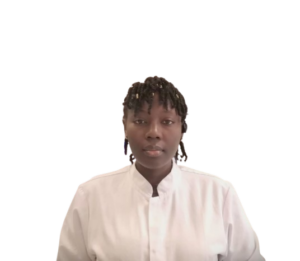
I am a biochemist and PhD candidate in Agricultural Technology and Biotechnology, specialising in plant pathology and sustainable plant protection. My research focuses on the biocontrol yeast Papiliotrema terrestris and its potential as an environmentally friendly alternative to synthetic fungicides. Using genomics, phylogenetics, RNA-seq, and bioinformatics approaches, I investigate the link between nitrogen metabolism, nitric oxide pathways, and plant–microbe interactions. I am motivated by translating research into practical solutions for sustainable crop protection and microbial-based bioproducts. Outside the lab, I enjoy creating content, exploring personal development, and sharing inspiring messages.